

By Lauren Prem
TNNLU VC says that female students wearing shorts “distracts” faculty members and “invites sexual harassment” (As reported by the Minutes of the Class representative meeting, circulated by the class representative in the respective student groups)
Policing of women’s bodies has been a usual, and seemingly casual routine across various platforms, be it classrooms, workplaces or public places. The hard reality is that such policing is propelled by deep-rooted stereotypes pervading a developing society like India and offensive remarks made about a women’s clothing get rewarded for enforcing “discipline” or “distractions”. However, such moral policing reinstates hopelessness regarding perpetual stereotypes, when it comes from highly regarded authorities who are vested with the huge responsibility and authority to run National Law Universities.
One such instance is a remark made by the Vice Chancellor of the Tamil Nadu National Law University (TNNLU), Professor Nagaraj in a Class Representative meeting held on 15th April 2026. The debate about women’s clothing choices being condemned continually, especially by highly regarded authorities, is reopened again, when TNNLU VC said that female students wearing shorts “distracts” faculty members. As per the minutes of the meeting, he then proceeded to say that women should wear “proper” clothing to classes and outside the university, although they are free to wear anything inside the hostel premises. Although the VC specifically stated that he is not going to enforce a dress code, a passing remark holds impact, meaning and a lot of hidden violence.
The Word “Proper” And The Violence It Carries
The word “proper” is a very widely used term in the context of policing female autonomy. On the face of it, the word seems to be arising from cherished values of respect and dignity. Yet, the issue arises in the foundational presumption that respect is directly dependent or closely tied to how “modestly” a women dresses. The word is violent in such policing contexts, especially because it hides behind cherished values, while at the same time, restricting women’s choices using moral justifications, that are inherently subjective.
The word “proper” has been used in relation to the clothing of women, since a very long time, in patriarchal societies where women rarely get to choose what they wear. Veils, ghoonghats, and long skirts were defended in the past as markers of respect, culture, and protection rather than as means of control, but have always had the same underlying logic, which is, we do not want to limit you, rather, the world cannot deal with you unless you are appropriately contained.
The “Distraction” Argument Intends To Protect The Wrong Crowd
Let us apply Professor Nagaraj’s argument with real intent and examine it in detail. He states that shorts are distracting to “everyone, including faculty.” What does that imply? He means that trained adult educators, those who are ultimately responsible for facilitating the learning of all students, are impaired in their ability to teach due to the sight of female students’ legs. If this is true, then the issue is not with the attire that a female student is wearing. It is, instead, with the professional climate and capacity of that institution to properly facilitate a space where students can learn with dignity and fundamental rights.
By identifying the problem, which is the supposed “distraction”, with women rather than with the gaze, the vice chancellor clearly indicates which party is to be protected by the institution. It also creates a sense of strong insecurity in the minds of female students, who exercise their bodily choices, as per their will. The larger body of the institution under which they fall, is instilling obedience paternalistically, by getting into discussions of “proper” and “improper” clothing. Although Prof. Nagaraj has categorically stated that he will not enforce a dress code, the statement still holds impact and force due to the position he occupies in the university.
Why This Matters That This Comes From Power?
Regressive thinking is a common instance in every society that is still recovering from the remnants of patriarchy and the Indian society is no exception. Yet, what is particularly troubling about this comment from Professor Nagaraj is that it comes from a person in a position of authority. A vice chancellor is not just an observer, rather, he helps to create institutional culture. When he speaks, he is telling every male student, faculty member, and administrator below him what the implicit hierarchy is at the university. And while he may not alter an individual syllabus or grading system, he will create a more lasting impact on the invisible structures that define who gets included at the university today and under what circumstances.
It is precisely for this reason that comments made by someone in a position of power cannot be understood as simply being about the individual making the comment. A colleague’s comment can be thoughtless, or one can just roll one’s eyes at it and forget it over a cup of coffee. The same cannot be said, however, for the comments of someone in a position of authority making a comment about your body. A comment made to you in an institutional context, such as by a vice chancellor, will become part of your understanding of yourself in that institution. It is not the same thing.
What Accountability Looks Like?
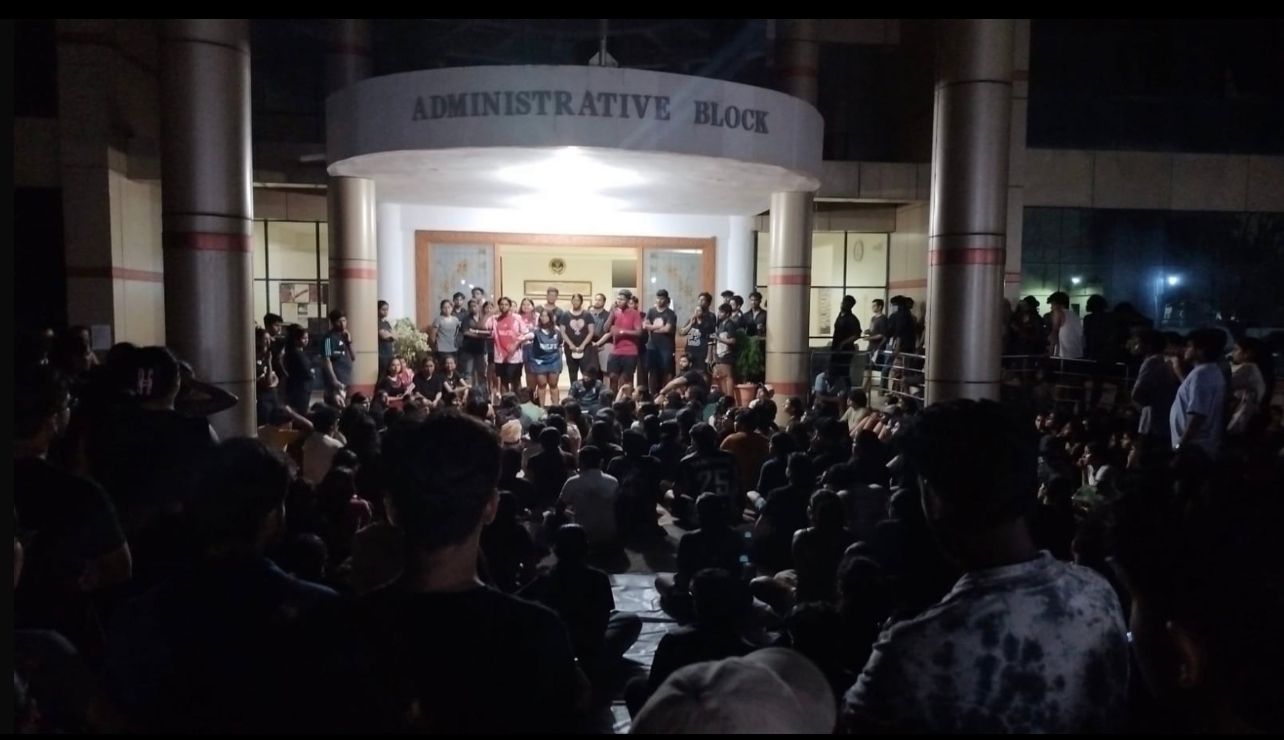
The students of TNNLU do not ask that Professor Nagaraj resign, they do not ask that he face legal consequences, they only ask that he acknowledge his mistake, and by “acknowledge,” they do not simply mean that he make an administrative non-apology such as “I’m sorry if anyone felt I was offending them.” They are asking him to acknowledge that what he said was an error and to acknowledge that women, including the women who were the recipients of his remarks, deserve a great deal more from Professor Nagaraj, the head of the university they attend. The students of TNNLU have also issued a statement of condemnation of his comment, as it is not a one-off incident. The VC has made similar comments during his tenure at other universities, particularly the widespread news on his remark about NLSIU students’ clothing also.
As mentioned before, this is not an isolated incident as there is a pattern in how Prof. Nagaraj tends to continually sexually stereotype women. In 2016, Prof. Nagaraj reprimanded a female student for wearing shorts in class in addition to making sexually charged and derogatory comments about her objection to his reprimand, there was widespread outrage among NLSIU students in 2016 over his comments. He made a number of statements regarding the parent/child relationship that among other things and made disparaging comments about the character of the student who had objected to his statements. Students responded with a collective protest by attending class in shorts and demanding an apology from him, demonstrating their view that his statements represented not just moral policing, but rather an extreme form of sexism and humiliation in an academic environment.
The students at TNNLU are becoming lawyers. As lawyers, they will be fighting to ensure that all people are treated equally in society. When Professor Nagaraj made his comment about women, he was undermining the very principle of equality that the students will be trying to promote as lawyers. The comment need not be enforced to hold weight. Professor Nagaraj, as the person in charge of the law in his institution, should have an idea of the weight his implication carries.
My clothing is not what needs to be altered. The mind which thinks it distracts, needs to be.
Lauren Prem is a fourth year student at Tamil Nadu National Law University, pursuing B.com LLB (Hons.). The author derives the source of this article from the minutes of the meeting between the VC, faculties and class representatives, penned by the class representatives themselves. Views are of the author.
