

By Anusha Subramanian
When India’s Blind Women’s Cricket Team was recently honoured alongside the country’s other World Champion squads, it marked more than just a sporting milestone—it was a powerful moment of recognition. A reminder that sport, at its best, levels the playing field, bringing everyone onto the same stage.
This kind of recognition has now been extended to blind mountaineer Chhonzin Angmo and blind track and field athletes as well. Angmo is a recipient of the National Award for Empowerment of Persons with Disabilities (2024) which she received from the President of India. Across disciplines, blind women in sport are reshaping the narrative, not by asking for attention, but by proving through action that ability is not defined by sight.
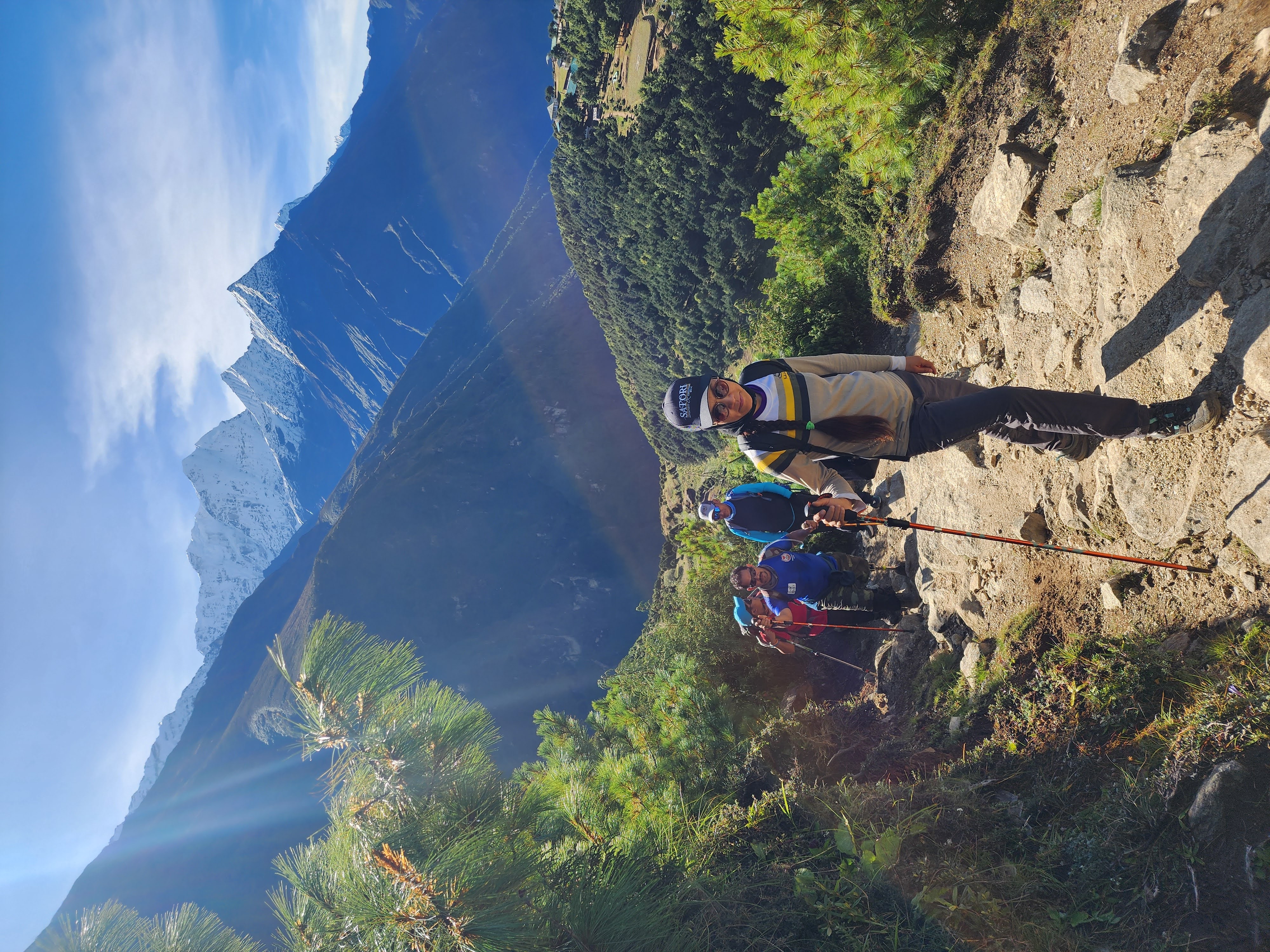
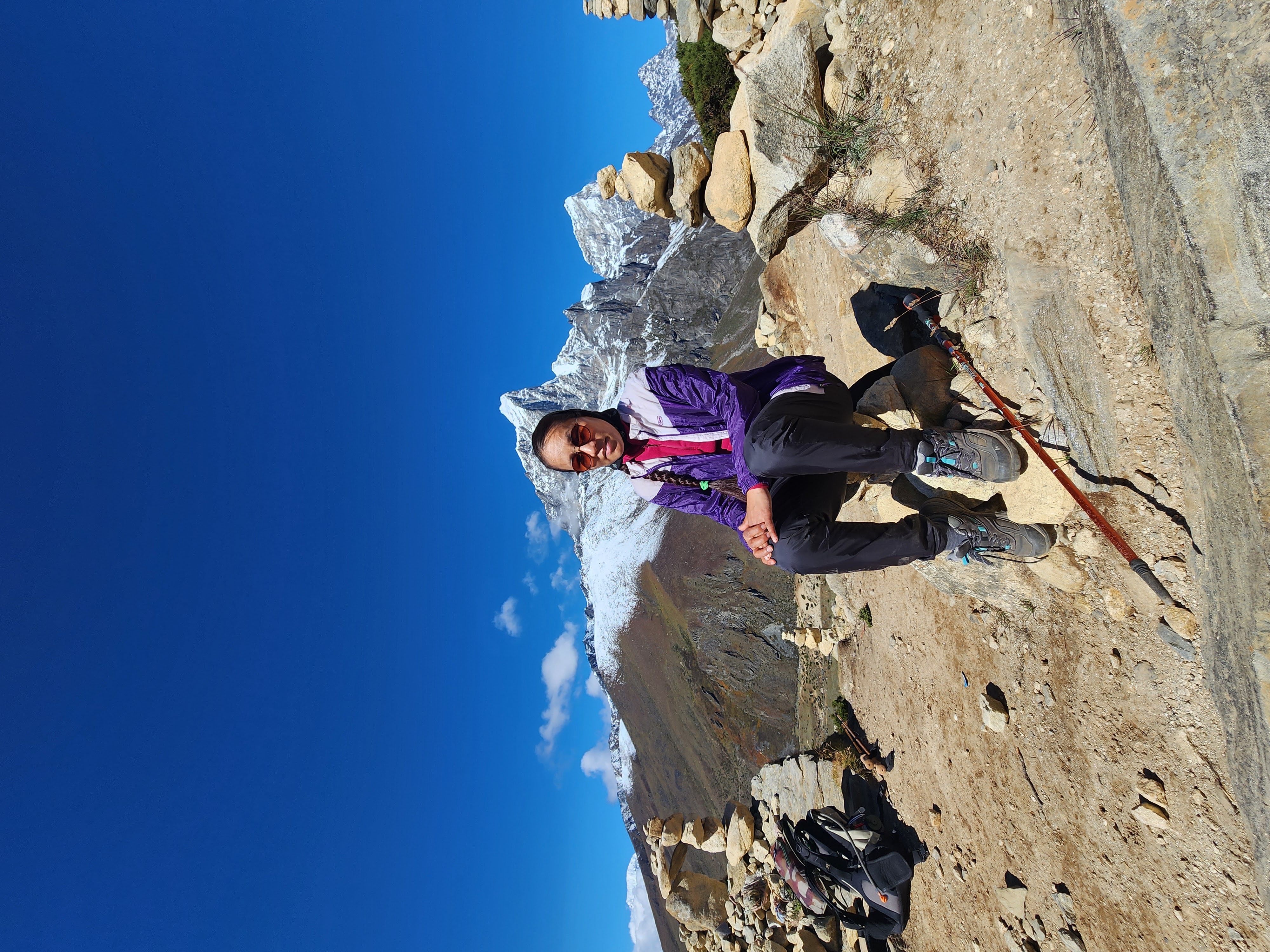
I first met Angmo in September 2024, when I accompanied her on a trek to Everest Base Camp as a mountain guide. At the time, I thought I was guiding her. But as we journeyed through the Khumbu Valley, step by step for ten days, I realised it was the other way around. She led me, to a new understanding of resilience, independence, and what it truly means to belong.
Near Thukla, where the trail turns steeper and the cold bites harder, she smiled, tapped her trekking pole, and said, “Let’s go. I can feel the mountain breathing.” That line has stayed with me ever since.
The mountain didn’t care that she couldn’t see. It responded only to her determination. Her climb wasn’t just about reaching Everest Base Camp, it was a declaration: the outdoors is for everyone.
Eight months later, in May 2025, Angmo stood on the summit of Mt. Everest. Her achievement wasn’t simply personal, it became part of a quiet but growing movement, one in which blind women are refusing invisibility. They are not waiting to be noticed, they are insisting on being seen.
That same insistence echoed last month when India’s Blind Women’s Cricket Team lifted their first World Cup trophy. Many of these women started playing barefoot on borrowed fields. Their journey to victory is a reminder: you don’t need sight to have vision. What the world needs is to open its eyes.
What moved me most about Angmo was not her blindness, but how invisible her effort became to others on that EBC trail. On narrow Himalayan trails, her careful, deliberate steps were often overlooked by trekkers passing by. That’s the paradox: blindness is a disability that often hides in plain sight, and with it, the struggle to adapt to environments that were never built for you.
In India, over 9 million people live with blindness, most of them women. They are often told to stay safe, stay indoors, and stay silent. Not because they lack capability, but because the world lacks imagination.
As Deepika TC, captain of the national blind women’s cricket team, once shared, “You’re blind. What are you going to do?”a question every woman on her team has heard. For them, and for Angmo, sport isn’t just a pastime, it’s a way to reclaim space, to say: we can do this too.
That journey isn’t easy. While opportunities are growing, access still comes at a cost. Adaptive equipment if required, coaching, and guides are essential, and yet, guides are rarely paid, and support systems are patchy at best. India urgently needs a national fund for para-athletes and disabled adventurers and certified training programs for guides who make participation possible.
Ask any blind woman athlete what keeps her going, and she’ll likely tell you: freedom and opportunity. They are not asking for sympathy or applause. They are demanding recognition, respect, and infrastructure that allows them to thrive.
True inclusion happens when we stop seeing disability as exceptional and start seeing talent as the norm. These women aren’t waiting for approval, they already belong.
If we’re willing to truly look, we’ll realise that they’re not just transforming the sports world. They’re teaching us how to see, clearly, fairly, and without bias.
