

By Avani Bansal
I have never met Neha Bora. If our paths crossed today, we would probably recognise one another from television or social media. We might exchange a warm greeting, speak about the issues that brought us into public life and, before long, discover that we disagree on several political questions. She leads the All India Students’ Association. I serve as a National Spokesperson of the Indian National Congress. We come from different political traditions, shaped by different ideological journeys. Those differences are real, and they matter in a democracy.
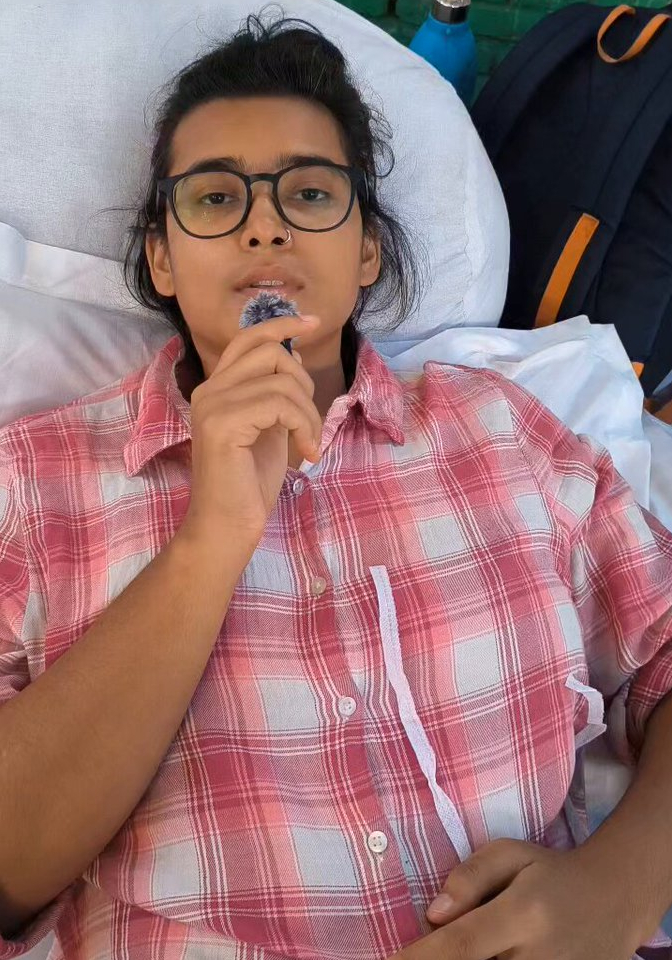
Yet over the past few weeks, I have found myself doing something that surprised even me. Every few hours, almost instinctively, I would reach for my phone and search for just one thing: How is Neha today? I was not searching for the latest political statement or trying to understand the day’s developments at Jantar Mantar. I simply wanted to know whether she was alright. Had her health deteriorated? Had she finally agreed to medical treatment? Was she still able to stand and speak? It took me several days to understand why a young woman I had never met had begun occupying so much space in my mind.
Perhaps the answer lay in memory. Last year, I sat on a fifteen-day hunger strike demanding justice for the victims of the Harda firecracker factory blast. It was one of the most physically demanding experiences of my life, and it taught me something that newspaper reports and medical bulletins can never fully capture. Hunger does not arrive as a dramatic collapse. It creeps in quietly. The first few days convince you that the body is stronger than you imagined. Then the dizziness begins. Weakness follows. Every small movement becomes deliberate, doctors begin speaking a language that your loved ones wish they never had to hear, and every phone call carries an anxiety that was absent the day before. The body, which has faithfully carried you through life without demanding attention, suddenly becomes the centre of every conversation.
Watching Neha over these past weeks, I realised I was not imagining what she must be experiencing. I was remembering something my own body had once known. There is a strange, unspoken bond between people who have undergone prolonged hunger. You do not need to know one another personally to recognise the signs of exhaustion, the effort it takes to continue speaking, or the quiet concern that settles over everyone around you. Perhaps that is why, even while recovering from a viral illness myself, my thoughts kept returning to Jantar Mantar. I wanted to know how many days it had been, whether her medical reports had worsened and whether she was still finding the strength to continue.
The truth is that I do not agree with Neha Bora on everything, nor should I pretend otherwise. Political differences are not inconveniences to be brushed aside in moments of emotion; they are an essential part of democratic life. We argue because ideas matter. We contest elections because ideas matter. We organise because ideas matter. But there are moments when another question quietly rises above ideological disagreement. What does it mean for a young woman to decide that her own body is the final instrument of protest available to her? That question stayed with me long after I had put my phone down.
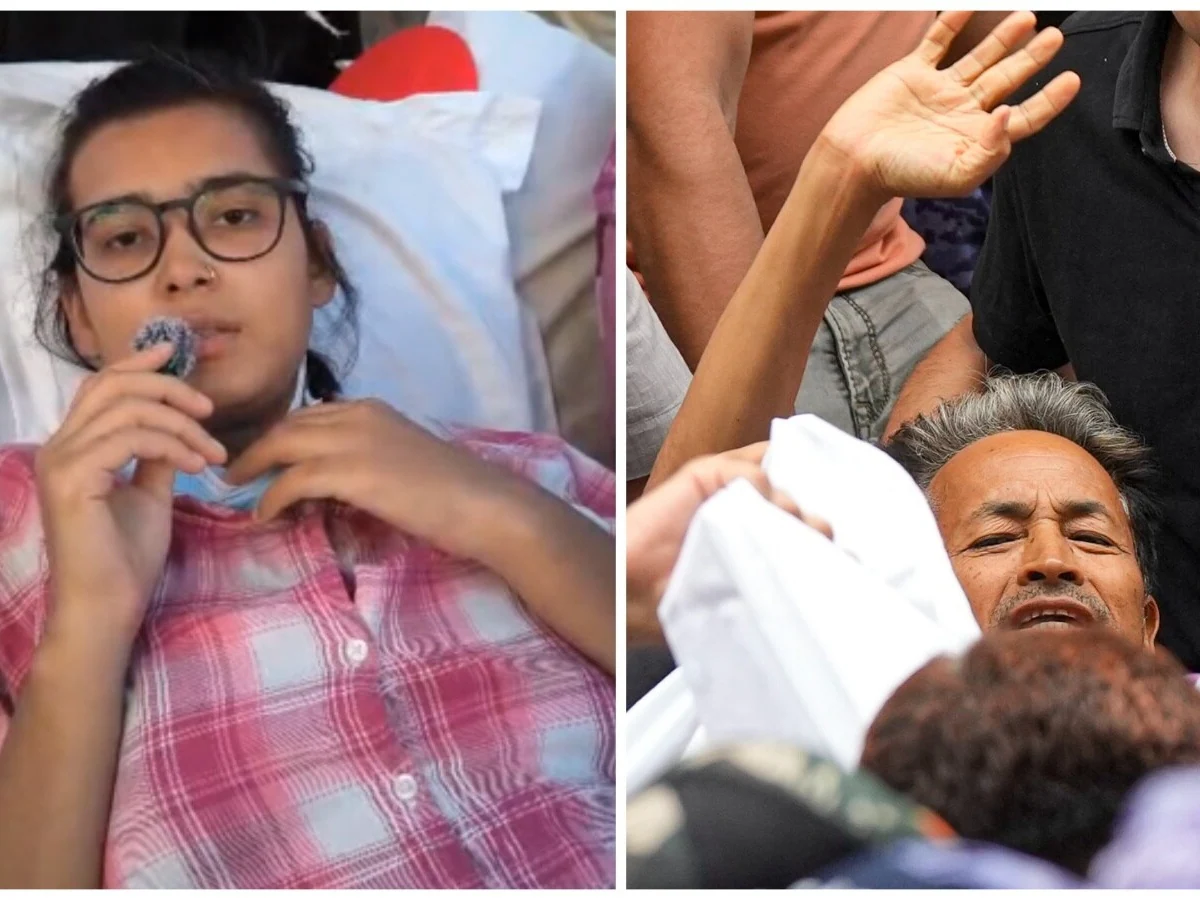
When Sonam Wangchuk’s health deteriorated and he was hospitalised, the country’s attention quite naturally followed him. His stature brought national visibility to the movement. Yet after the cameras shifted, another image remained with me just as powerfully: Neha Bora, alongside Manish Kumar and Aameen Amitoj, continuing their fast day after day with little certainty about when, or whether, their demands would receive a meaningful response. There is an extraordinary loneliness in continuing a struggle after public attention begins to fade. Perhaps that is where conviction reveals itself most clearly. There are countless others – all young people, who I have been watching – Abhijit Dipke, Saurav Dass, Danish and and others, who have held the fort. There are several other congress – NSUI and IYC young people who have been challenging the examination system in their own ways and have been raising the issue of paper leak. Infact I had the opportunity to meet Danish – a few days back at JNU. No matter what their differences, all of these young people, beyond political faultlines have a spirit, that is hard to brush aside. It is all consuming, a signature youth energy – that leaves no one, except the government, untouched.
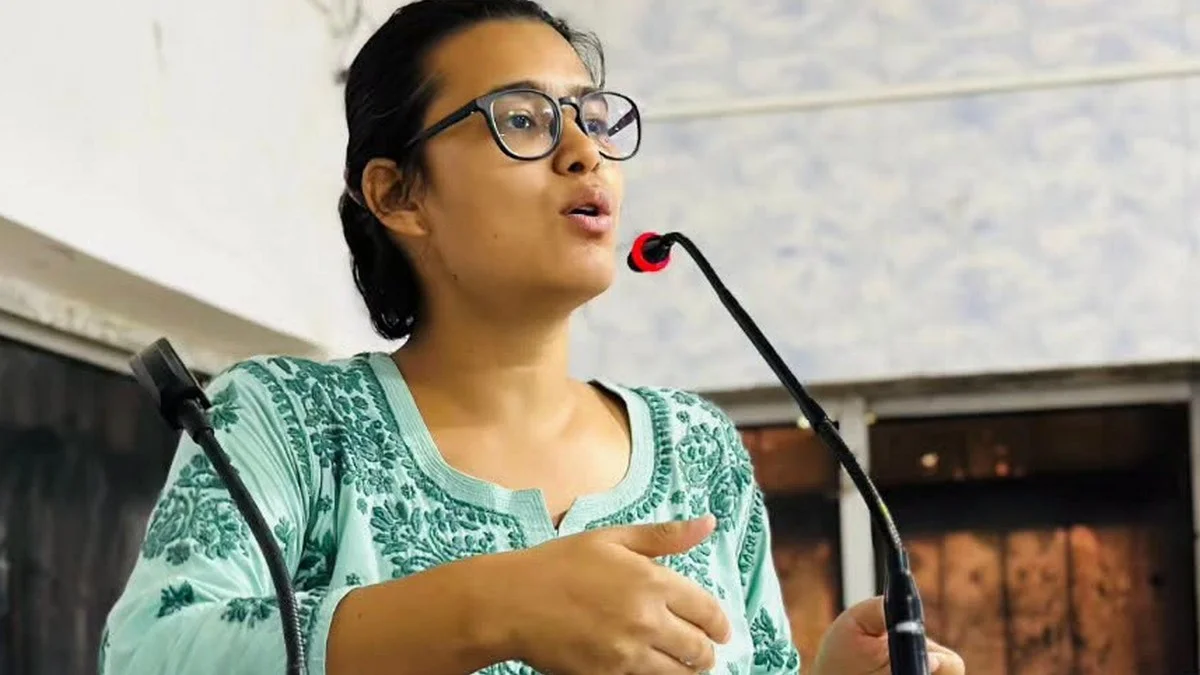
But like all of us trying to find a hero in the battlefield, my eyes rested on Neha. As I listened to Neha’s speeches, I found myself noticing something that had very little to do with politics. It was the influence of theatre. She does not speak as though she is trying to overwhelm an audience. She speaks as though she is inviting people into a conversation. There is rhythm in her words, but also restraint. She understands the value of silence as much as speech, and that quality has become increasingly rare in a political culture that often mistakes volume for conviction.
But if I am completely honest, this essay is not really about Neha Bora alone. It is about something she made me realise about women in public life. We are constantly encouraged to see one another as competitors. Who received more attention? Whose movement mattered more? Whose sacrifice was greater? Whose ideology was purer? Public life teaches women to compare themselves with one another long before it teaches them to recognise one another. Yet while watching Neha, none of those questions occupied my mind. I kept returning to one simple thought: I hope she is alright.
There is something profoundly moving about watching another woman refuse to surrender public space. Perhaps only women who have occupied public life truly understand this feeling. We know what it means to have our motives questioned before our arguments are heard, to be described as too emotional one day and too ambitious the next, to carry the loneliness that often accompanies speaking in spaces where we are still expected to justify our presence. That shared experience does not erase political differences, but it creates a quiet form of recognition that exists beneath them.
As I reflected on why Neha’s fast had affected me so deeply, my mind wandered to other women across India. I thought of the women of Shaheen Bagh, many of whom had never imagined themselves as political actors until history called upon them. I thought of young lawyers challenging powerful institutions, journalists continuing to ask uncomfortable questions despite intimidation, women in villages resisting entrenched hierarchies and countless others whose names never become national headlines. These struggles are different in their causes, methods and ideologies, and they should not be carelessly merged into one story. Yet together they reveal something remarkable. Every time a woman occupies public space with courage, she quietly expands that space for another woman she may never meet.
Patriarchy is sustained not only through laws and institutions but also through imagination. It survives by teaching generations of girls that certain spaces are not meant for them, that politics belongs elsewhere, that leadership belongs elsewhere and that resistance belongs elsewhere. Every woman who refuses that lesson shifts the boundaries of possibility ever so slightly. Somewhere today, a young girl in Harda, Siliguri, Imphal, Srinagar or Madurai may be watching Neha Bora without ever intending to join AISA or any political organisation. She may never contest a student election or sit on a hunger strike. Yet she has seen one undeniable truth: a young woman can stand at the centre of a national conversation because she believed her voice mattered. Sometimes history changes not because millions march, but because one girl quietly watching decides that one day she, too, will speak.
When I think of Neha Bora today, I do not think first about ideology. I think about courage – not because courage is always rewarded or even always successful, but because it asks something profoundly difficult of the person who carries it. When this protest ends, politics will return to its familiar rhythms. Elections will be fought, parties will disagree and we will continue debating policies, constitutional principles and competing visions for India. That is exactly as it should be. But I hope we do not lose something these past few weeks reminded me of: the ability to recognise courage before we recognise colours, to acknowledge sacrifice without first asking which flag stands behind it and to understand that empathy is not ideological surrender. It is democratic maturity.
Perhaps that is why I could not stop thinking about Neha Bora. Not because she belongs to my political tradition, but because she does not. In a time when we are encouraged to see one another first as opponents, she reminded me that there remains something older and more enduring than political identity. Before we are spokespersons, student leaders, lawyers or activists, we are human beings. Sometimes the most meaningful political act is not to agree with another person. It is simply to care what happens to them. And yes, our empathy should never stop at the faultiness of gender, and yet in the deeply patriarchal world that we live in – faces like that of Neha and Danish remind us – that an equal world is possible, where our genders won’t matter and together we are building it.
