

By Shivangi Sharma
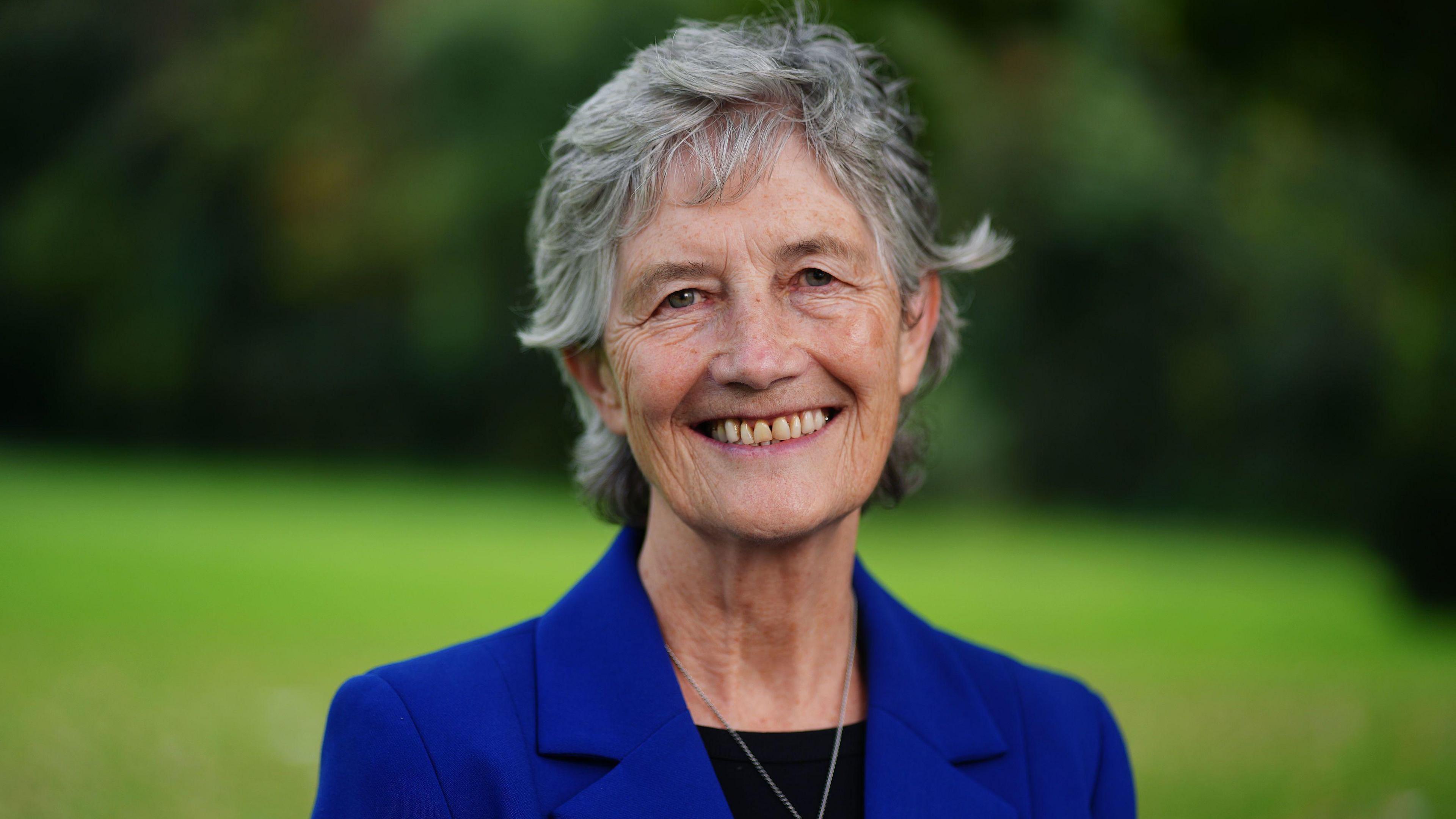
2025 delivered some fascinating political breakthroughs abroad. Across multiple democracies, voters rejected long-entrenched conservative establishments and chose candidates who openly identified with the left. While many of us cheered Zohran Mamdani’s iconic mayoral win in New York City, an equally consequential victory unfolded across the Atlantic: Catherine Connolly’s election as the 10th President of the Republic of Ireland.
A former psychologist and barrister who ran as an independent, Connolly won in a landslide, securing 63% of first-preference votes—reportedly more than any candidate in Irish electoral history. The Irish presidency is largely ceremonial, but the symbolism of her mandate is unmistakable. To understand why this moment matters, it helps to recall the long and complicated path that brought Ireland to today.
A Compressed History of Ireland’s Struggle for Self-Determination :
Ireland, a small island west of Great Britain, is divided into the Republic of Ireland and Northern Ireland. The Republic became an independent state in 1922; Northern Ireland remains part of the United Kingdom.
English dominion over Ireland began in the 12th century, when Anglo-Norman adventurers established footholds in the southeast. In 1171, King Henry II asserted authority, and over the centuries English and later British power expanded across the island—through civil administration, the legal system, the military, and the police. In classic colonial fashion, land confiscations and the anglicization of Irish society eroded native culture and language.
The 17th century saw violent rebellions, particularly in Ulster. In response, the British government tightened control by excluding Irish Catholics from Parliament, enforcing harsh penal laws, and expanding land confiscations—consolidating power among Protestant loyalists.
Resistance did not fade. Inspired by the American and French revolutions, the United Irishmen launched a rebellion in 1798 seeking to unite Catholics and Protestants against British rule. Its failure preceded the 1801 Act of Union, which abolished the Irish Parliament and shifted legislative power fully to London.
The Great Famine of 1845–1849 laid bare profound inequalities: mass starvation, emigration, and political neglect heightened nationalist sentiment. The Home Rule movement pushed for a restored Irish parliament within the UK, even as many pressed for full independence. In the early 20th century, Sinn Féin channeled that momentum into a political program to end British rule. The 1916 Easter Rising, though swiftly suppressed, ignited public support and ultimately led to the 1919–1921 War of Independence, a guerrilla campaign by the Irish Republican Army (IRA). The 1921 Anglo-Irish Treaty partitioned the island, creating Northern Ireland (remaining in the UK) and the Irish Free State. The treaty triggered a bitter civil war, and in 1949 the state formally declared itself a republic and left the Commonwealth.
Partition entrenched conflict in Northern Ireland between unionists (mostly Protestants supporting British rule) and nationalists (mostly Catholics seeking a united Ireland). The Troubles, beginning in the late 1960s, shut down local institutions; British troops were deployed; and violence scarred decades of public life. A negotiated path emerged only after IRA and British ceasefires, culminating in the 1998 Good Friday Agreement.
Why Connolly’s Victory Matters Now :
Post-independence, Irish politics came to be dominated by two center-right parties: Fianna Fáil and Fine Gael, with the latter generally read as more socially liberal. Over the last two decades, as the Catholic Church’s authority waned and the economy increasingly oriented around multinational capital, many voters grew disillusioned—especially amid housing crises and widening inequality. Smaller left formations gained ground, Sinn Féin’s support rose, and, notably, Connolly’s presidential run drew rare unity from the often-fragmented Irish left.
Connolly’s campaign was unapologetically leftist, anti-imperialist, and feminist. Her priorities were clear: fix housing, support the most vulnerable, and defend Irish neutrality. On global issues, she amplified voices too often sidelined: among them, solidarity with Palestinians amid catastrophic violence in Gaza. Her stance resonated with younger voters, whose opinions have been trending left; even Northern Irish hip-hop group Kneecap urged voters to back her, a cultural crossover that underlines a broader generational shift. Connolly, for her part, praised Kneecap as a force for the Irish language—signaling a politics that’s as cultural as it is electoral.
The Power—and Limits—of the Irish Presidency :
Ireland’s presidency carries moral authority and soft power more than legislative muscle. Connolly understands these constraints yet treats the office as a platform to shape public debate. In her inaugural address, she acknowledged how improbable her victory once seemed: “We were led to believe that it was too great a leap, that our ideas were too far out, too left—at odds with the prevailing narrative.” The electorate proved otherwise. Her first Christmas message extended solidarity to those affected by climate change, war, conflict, and displacement—an unmistakable rebuke to the politics of cruelty.
In an era defined by leaders who govern through division—Donald Trump’s relentless targeting of immigrants in the United States, Narendra Modi’s majoritarian politics in India—Connolly offers a different model: one that asks people to “use our voice to celebrate diversity, to champion sustainable solutions to the climate crisis, and to advocate for peaceful resolutions to conflict and war.” The contrast is stark. And it matters far beyond Ireland.
A Left Turn With Global Implications :
That a nation so intertwined with Anglo-American capitalism is now elevating a self-declared socialist is striking. But it’s not an aberration: it’s a product of material realities—the housing emergency, the precarities of gigified work, the anxiety of climate catastrophe—and a political imagination that refuses to treat austerity and privatization as inevitable. The left’s gains in Ireland (and in places like New York) show that when movements stay rooted in everyday struggles while articulating a humane internationalism, voters respond.
Of course, no presidency—least of all a ceremonial one—can solve structural crises alone. But political victories change what feels possible. Connolly’s election expands the horizon of debate: on housing as a right; on neutrality as a principled stance in a dangerous world; on feminism that is social and economic, not just symbolic; on solidarity that crosses borders and refuses to rank human lives.
Why This Resonates From Dublin to Delhi :
For many in India disillusioned by majoritarianism, democratic backsliding, and the normalization of hate, Connolly’s win is a reminder that politics can be about care, not contempt. It can be cool, creative, and deeply serious—grounded in culture, history, and everyday needs. It can refuse the false choices between prosperity and equality, security and dignity, growth and justice.
Ireland’s story has always been about resisting domination—imperial, economic, cultural—and building a broader “we” out of fracture. Connolly’s presidency sits squarely in that tradition. It doesn’t promise miracles. It does something rarer: it affirms that the center of gravity can shift when people organize around humane ideas and refuse to accept that the status quo is the ceiling of our collective imagination.
Until we can celebrate such victories at home, let’s take heart from Ireland. Let’s hail President Catherine Connolly—not just as a singular leader, but as proof that solidarity, persistence, and hope still have the power to win.
