

By Anusha Subramanian
History rarely announces its milestones, but 2025 seems determined to make itself heard. This year is turning out to be a defining year for women in global politics. For the first time, several nations across continents have women at the very top, not just as ministers or deputies, but as heads of state and government.
Mexico elected Claudia Sheinbaum as its first woman president, Namibia swore in Netumbo Nandi-Ndaitwah as its first female leader, and Suriname followed with Jennifer Geerlings-Simons taking office. In Japan, Sanae Takaichi became the first female Prime Minister in October 2025.
These are not isolated events. They mark a steady global shift, one where women are not just entering politics but finally shaping it. And as the world takes note, India too must look inward at how far it has come, and how far it still needs to go.
Wider Trend: More Women Reaching the Top
For the longest time, men have dominated political spaces across the world. Their overrepresentation in decision making has slowed the path to equality, leaving women on the margins of power. Yet the shift began much earlier than most people realise.
The journey of women ascending to the highest political offices started in the mid twentieth century. In 1960, Sirimavo Bandaranaike of Ceylon, now Sri Lanka, became the world’s first woman prime minister. Her election cracked open a door that had been firmly shut. Since then, more than 60 countries have been led by women, marking a gradual but steady acceptance of female leadership.
Over the last few decades, that door has opened wider. The latest 2025 figures from UN Women and the Inter Parliamentary Union show that women now serve as heads of state or government in 29 countries. That number was 22 in 2021. The rise may be slow, the gaps still obvious, but the direction of change is undeniable.
And the impact goes far beyond symbolism. When women lead, they often bring a different set of priorities into focus: social policy, education, climate action, equity, and inclusion. They question long standing institutional biases and introduce leadership styles that are often more collaborative and reform driven. Most importantly, they shift what young girls believe is possible. Visibility matters. Seeing a woman lead a nation teaches the next generation that power is not determined by gender.
In her very first speech Claudia Sheinbaum said, to the governing party’s lawmakers, “It is time for women. “Women have arrived to shape the destiny of our beautiful nation “, she added.
Still, parity remains distant. Men continue to dominate parliaments, cabinets, and local governments. UN Women’s 2025 ‘Women in Politics’ map shows that fewer than one in four cabinet ministers globally is a woman, and men continue to control key portfolios like foreign affairs, finance, home affairs, and defence. According to the Council on Foreign Relations’ Women’s Power Index, only a small fraction of countries are led by women.
So even as the world celebrates more female heads of state, the bigger question remains, does this leadership translate into deeper institutional change? Who gets to speak, what gets prioritised, and how do the systems themselves evolve? The trend is encouraging, but the work is far from done.
Spotlight on 2025’s Trailblazers
Claudia Sheinbaum – Mexico
When Claudia Sheinbaum was sworn in as Mexico’s first woman president in October 2024, it was more than a political victory. It was history catching up. Mexico, a large democracy long dominated by male politicians, had chosen a climate scientist with a strong record in governance and academia. Sheinbaum brings a scientific temperament to leadership and a clear focus on clean energy and social equity. Her presidency carries symbolic weight but also faces hard realities, crime, corruption, and inequality. How she manages those will define not just her legacy, but the perception of women leaders in Latin America.
Netumbo Nandi-Ndaitwah – Namibia
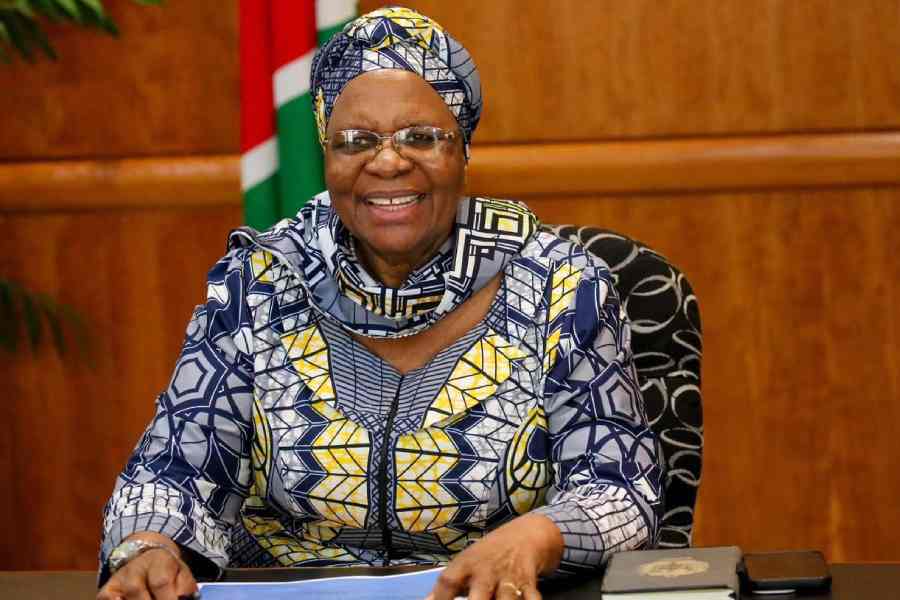
In March 2025, Namibia’s Netumbo Nandi-Ndaitwah became the country’s first female president. A veteran of the liberation struggle and a long-time diplomat, she is among Africa’s few women heads of state.
Her rise matters because it signals that women can reach the highest office not through tokenism but through long, credible political careers. In a continent where patriarchal norms remain entrenched, her presidency could alter institutional culture, prioritising accountability, environment, and gender-balanced governance.
Jennifer Geerlings-Simons – Suriname
In July 2025, Suriname elected Jennifer Geerlings-Simons as its first woman president, at a time when the nation faces both economic challenges and opportunities from newly discovered offshore oil reserves.
A physician by training and seasoned parliamentary leader, she represents a quieter form of power — one grounded in consensus-building and continuity. Her win shows that the gender wave is not limited to major economies; it’s reaching smaller, diverse countries where representation had long been stagnant.
Sanae Takaichi- First female Prime Minister of Japan
Sanae Takaichi made history in October 2025 when she became Japan’s first female Prime Minister, breaking one of the country’s most enduring political barriers. Her rise marks a turning point in a system long dominated by men, signalling a shift in public sentiment and party politics alike. For a nation where women have traditionally been underrepresented in leadership, Takaichi’s appointment wasn’t just a political milestone; it was a cultural one, opening the door a little wider for future generations of Japanese women to step into positions of power.
The Indian Reality: A Democracy Still Catching Up
A closer look at home turf, India, often celebrates its legacy of having had one of the world’s earliest female prime ministers. Yet, nearly half a century later, women remain drastically under-represented in Parliament.
The 18th Lok Sabha has 74 women MPs, roughly 13.6 per cent of the House, a slight dip from the 78 in the previous term. Yet when you look at the longer arc, the progress is undeniable. From just 22 women in the first Lok Sabha to consistently 75 to 78 in recent ones, representation has grown steadily. However, this percentage is still far below the global average of 27 per cent.
The much-touted Women’s Reservation Bill, passed in 2023, promises to reserve one-third of all seats in Parliament and state assemblies for women. It’s a landmark reform on paper, but implementation hinges on future delimitation, which means its real impact might be years away.
This imbalance isn’t about capability, it’s about structure. Political parties still field relatively few women candidates, and when they do, the seats are often unwinnable. Campaign funding, visibility, and media coverage also skew heavily towards men. Many women who do enter politics come from political families, reflecting how dynastic pathways substitute for institutional equality.
That said, India’s political landscape is not static. The presence of strong women in national and regional politics, from the finance and foreign affairs portfolios to dynamic young MPs and local leaders, shows that change is seeping through. Women are shaping the national agenda on issues like healthcare, education, safety, and social inclusion. It’s just that the numbers haven’t caught up yet.
What This Means for Global and Indian Politics
Globally, women in leadership positions are bringing new priorities to the forefront: long-term sustainability, peace-building, and inclusive policy-making. Several studies show that female leaders often invest more in health, education, and social equity.
In India, greater representation could mean a politics that feels closer to people’s everyday realities, safer cities, stronger healthcare systems, better childcare, and more focus on social justice. Representation is just the first step. True empowerment comes when women not only occupy seats in Parliament but also chair key committees, lead ministries, and influence party decisions.
The Road Ahead: From Symbol to Substance
The rise of Sheinbaum, Nandi-Ndaitwah, Geerlings-Simons and Sane Takaichi, proves that women can and do lead nations successfully. Across the world, and especially in India, the real test lies in moving beyond symbolic victories. For India, implementing the Women’s Reservation Bill, reforming party structures, and investing in local-level leadership training for women will determine whether it can bridge the gender gap in politics.
Diversity in leadership isn’t a token gesture. It’s how democracies renew themselves.
When more women enter politics, not just as symbols but as decision-makers, the conversation shifts. It becomes broader, fairer, and more reflective of the people it serves.
At the end of the day, progress isn’t just about seeing more women in Parliament. It’s about ensuring their presence reshapes the way politics serves its citizens, with empathy, balance, and vision.
